


I talk about data centers quite a bit in my work as an economist. Often, I might be asked about the (generous) tax incentives that states, cities, and county governments give to big tech companies or to discuss their effects on employment, neighboring home values, or tax revenues. Sometimes I get asked to talk about how data centers fit into the bigger economic and political pictures around energy, technology, AI, and the environment.
But it’s become much more personal as I watch heavy equipment tear up the earth, lights that could drown out the starry country sky, and hundreds of trucks and machines whir and roar in a 146.8 acre farm field just a few miles north of my hometown of Bowling Green, Ohio. Located just off of interstate 75 in Middleton Township in Wood County, the field sports an iconic white barn painted with a bright yellow smiley face that says “Hi! Joe and Gertie” that my school bus used to regularly pass by on field trips.
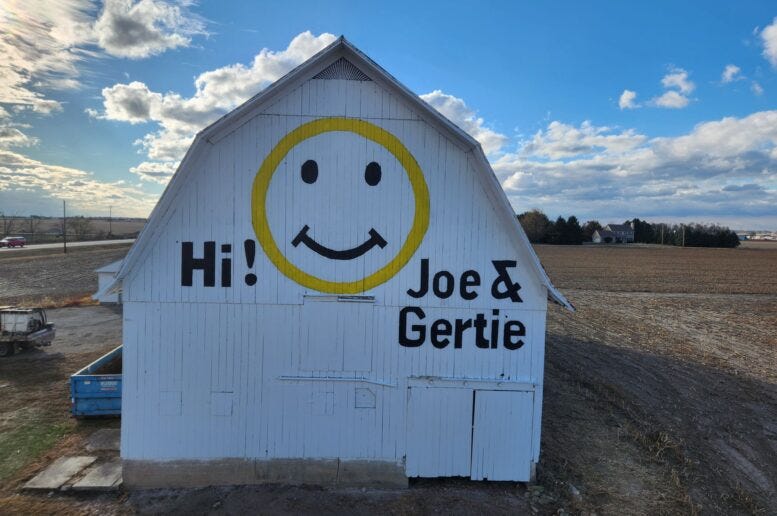
Why has this AI data center come to my hometown?
Even I’m not totally sure. Meta’s site says “Middleton Township stood out as an outstanding location for Meta to call home for a number of reasons. It provides good access to infrastructure and renewable energy, it has a strong pool of talent, and the company has found a great set of community partners that have helped us move this project forward.”
A seemingly a polite way to say, “there was cheap land and infrastructure for us to use.” And the statement about “access to renewable energy” is confusing, given that we now know that the data center is being powered with a behind-the-meter private 350 MW single cycle natural gas-fired power plant.
Meta’s location reasoning appears even less sincere when you click over to its other data center site pages. There, you can read a similar (or even an exact copy) of the same paragraph when they discuss other small communities across the country. I’ve copy and pasted a small sample is below:
“Rosemount, Minnesota stood out as an outstanding location to call home for a number of reasons — it provides good access to infrastructure and renewable energy, it has a strong pool of talent, and we have found a great set of community partners that have helped us move this project forward.”
Indiana, and Jeffersonville in particular, stood out as an outstanding location to call home for a number of reasons — it provides good access to infrastructure and renewable energy, it has a strong pool of talent, and we have found a great set of community partners that have helped us move this project forward.
“Richland Parish is an outstanding location for Meta to call home for a number of reasons: It has great access to infrastructure, a reliable grid, a business-friendly climate, and wonderful community partners that have helped us move this project forward.”
It seems quite dystopian to me, actually, to read nearly identical corporate phraseology over and over on a tech company website and knowing that behind each bland, vague, repeated paragraph there is a real place like the one where I grew up with real residents, real children and families, and a rich local history and fierce community pride.
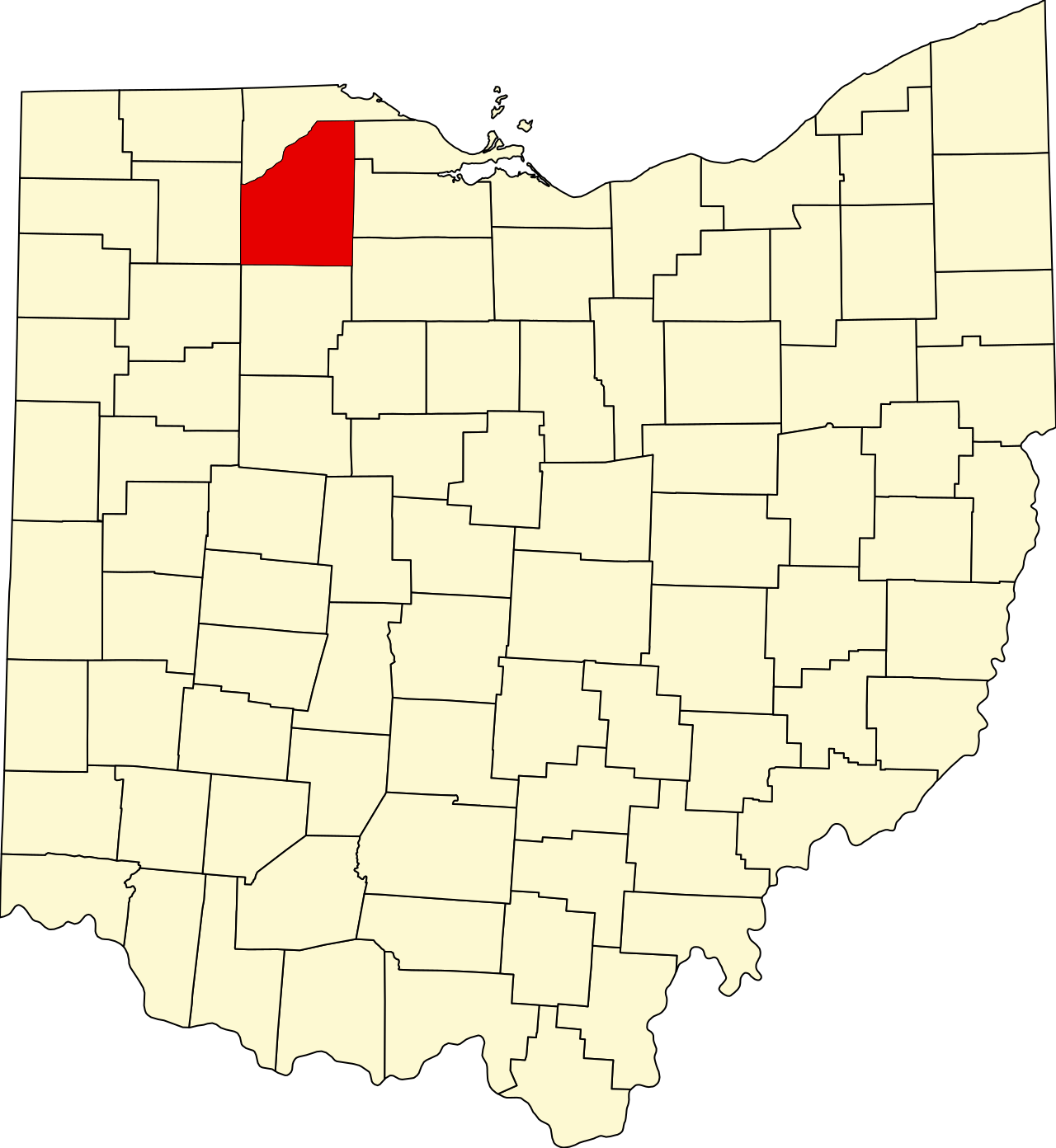
But like most things in America, it seems that these communities are now viewed as commodities — resources to be used in the pursuit of growth and profits. And often their own elected officials appear eager to sell them in the name of ‘economic development.’ So eager, in fact, that the community leaders in my town subsidized Meta’s $800 million data center investment. In 2023, Wood County Commissioners approved a 75% property tax abatement for 15 years for the project granted to a company developing the site for the Meta datacenter called Liames, LLC. Although local public school districts like Otsego and Eastwood have negotiated side payment agreements, that money allegedly won’t start materializing until at least 2030.
The corporate giveaways don’t stop there, though. Ohio taxpayers helped fund over $2 million in roadwork partially to “accommodate entry and exit to the Liames LLC site from State Route 582” where an estimated 1,000 vehicles a day coming and going at peak construction. A tax increment finance (TIF) agreement is in the works, which would be another 15 year tax subsidy granted by Wood County to help with project capital costs. Seemingly, this would grant a tax abatement of some sort to the data center property for 30 years in total. And while the exact state exemption details and numbers for the Wood County data center aren’t publicly known yet, Ohio at large was estimated to grant data center projects over $123 million in state sales tax exemptions in just 2024 and some datacenter projects claim job creation tax credits, exempting 75% of their state commercial activity tax for up to 15 years.
All of this possible subsidization, seemingly in the name of creating what Meta promised will be 100 permanent jobs at the site long term. You’d be forgiven, like me, for wondering whether the millions of tax dollars potentially being abated along with the state infrastructure money might have been better spent directly supporting local residents, entrepreneurs and small businesses, instead of first passing county money through a 1.7 trillion dollar company and hoping that good jobs come out the other end. Economic studies have shown that small businesses generally support more net job creation in the local economy.
New information to the public seems to come on delay.
Despite giving away local tax revenues and state taxpayer dollars and despite disrupting county residents and scenic farmland with more traffic, light, and noise, the real kicker came when the project filed paperwork to build a single cycle 350 megawatt natural gas plant to power the electricity-hungry datacenter.
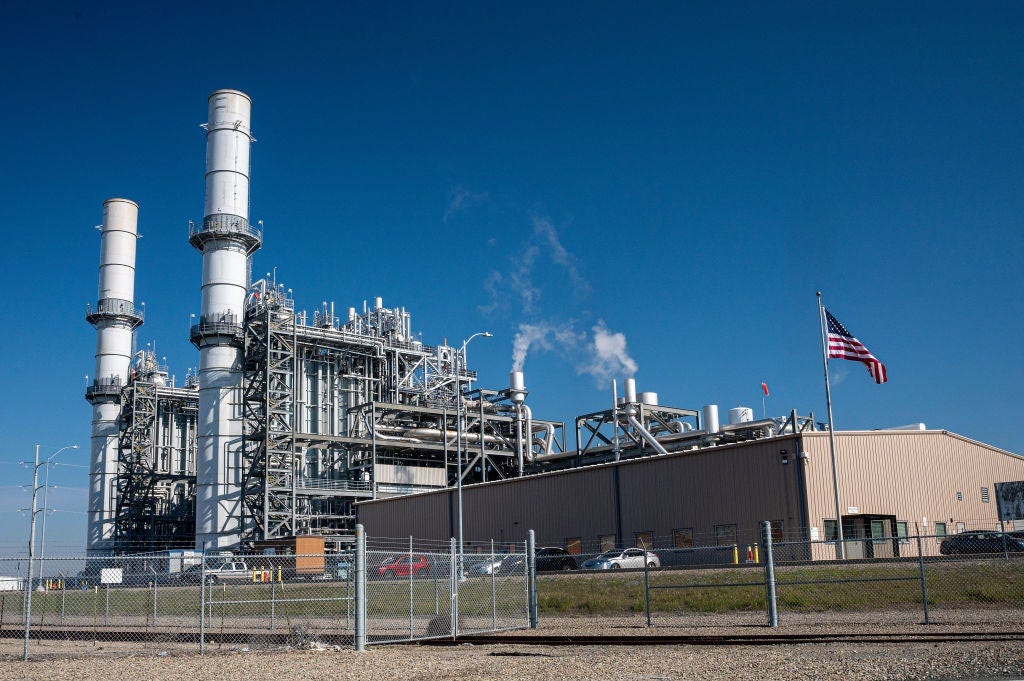
Despite all the talk about “renewable energy” being a reason for the data center’s location, a 350 MW natural gas plant would represent a huge new investment in fossil fuel generation capacity. If we (very) conservatively assume that roughly 200 homes at peak demand can be powered by 1 MW of electricity, then Meta’s proposed power plant alone would be capable of powering 70,000 homes. The 2024 US Census estimates are that Wood County, OH only has over 58,000 homes, in total. In other words, this isn’t a small thing. The datacenter gas plant is big enough that it could hypothetically likely power every house in the county if it were on the grid. This is far more power than the array of solar panels also planned for the site.
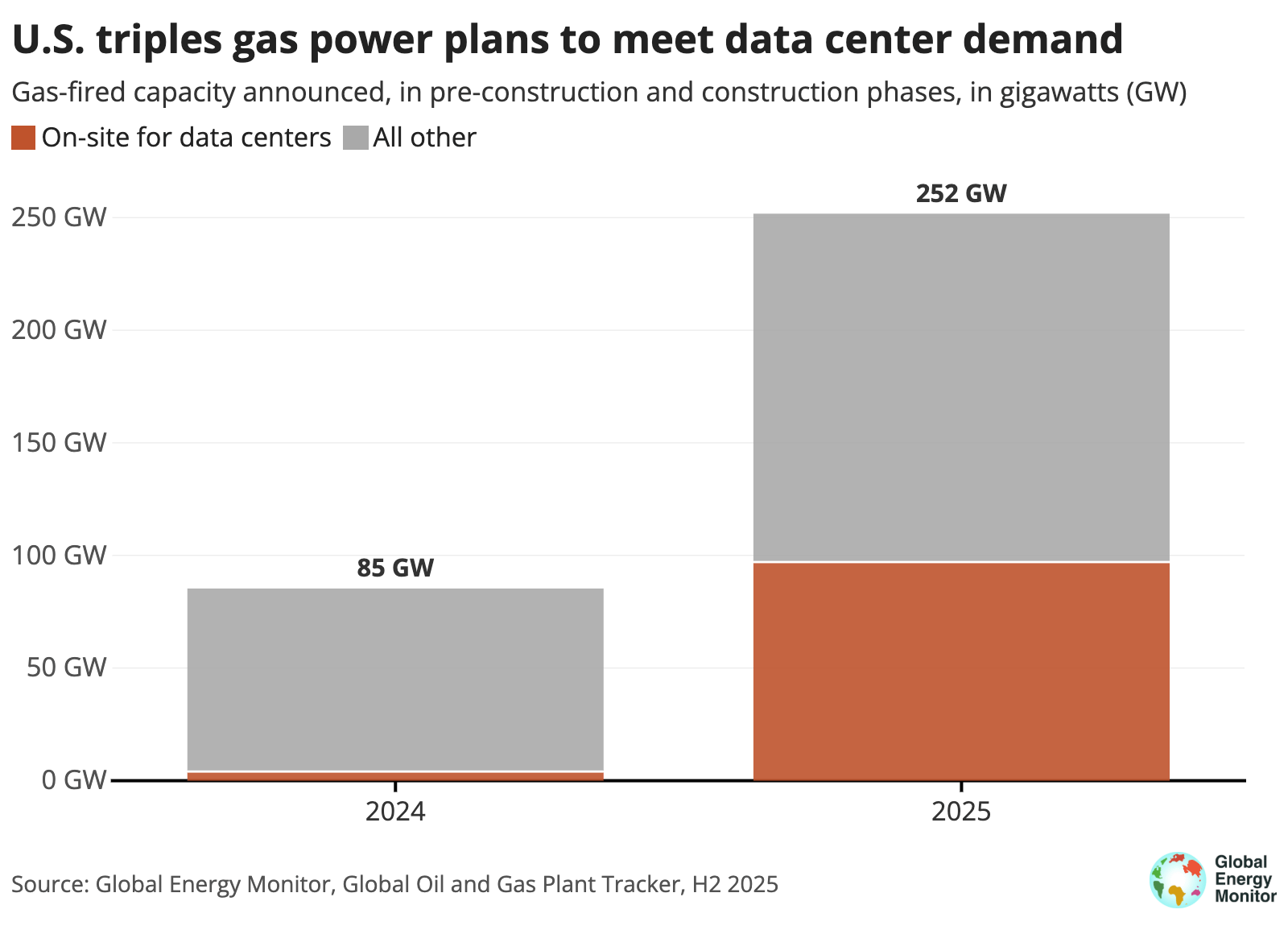
This fossil fuel build up for data centers isn’t just occurring in my hometown. Global Energy Monitor, a nonprofit organization that tracks oil and gas developments, found that in 2025 the U.S. tripled the capacity of gas-fired power plants in planning or production. In total, if all of that new capacity actually comes online, it would represent 252 gigawatts of new fossil fuel based production. The U.S. currently has roughly 565 gigawatts of natural gas fired plants online, in total. They find that more than one-third of this new planned capacity is slated for behind-the-grid datacenter projects like the one near Bowling Green.
I won’t fully dive into the energy affordability crisis we are experiencing in Ohio, with electricity rates rising as much as 44% for some customers. But I do want to note that the other two-thirds of the planned gas generation capacity could have real consequences for our utility bills. While fuel costs may represent a portion of recent price hikes, construction of new plants to help meet growing demand along with the transmission, and distribution infrastructure are usually passed onto consumers in the form of access fees and riders. This can directly increase household bills. Although the project in Bowling Green is behind the grid and won’t directly compete with local customers, that also means that the power generated at the site won’t be able to be sold back onto the grid to help increase supply or lower prices, either.
And you might say, “okay, well, that’s fine. They’re paying to build their own power plant and so it doesn’t help or hurt our local electricity bills.” Which would be a fine interpretation, if there weren’t nonmarket externalities that might negatively effect the community.
The costs of net-new air pollution for residents should be considered.
Here, we arrive at the crux of my concern. Air quality is what we economists consider a “public good”, which is something that we all collectively share and therefore have a collective responsibility to manage and maintain (hence, the name of this newsletter). Nobody owns the rights to the air we breath. But the data center site in Bowling Green appears to be planning to use a single-cycle turbine system, which is less efficient at converting fuel into electricity and, consequently, may need to burn fuel (and therefore emit) more often.
The paperwork, which was filed with the Power Siting Board of the State of Ohio and was subject to an automatic approval process on February 3, 2026 with no required public hearing under Ohio law, reported that, “Regulated pollutants that would be emitted by the facility include particulate matter (PM), particulate matter less than 10 microns in size (PM10), particulate matter less than 2.5 microns in size (PM2.5), nitrogen oxides (NOX), sulfur dioxide (SO2), carbon monoxide (CO), volatile organic compounds (VOCs), total hazardous air pollutants (HAP), formaldehyde (CH2O), and carbon dioxide (CO2).”
I’ll provide a quick rundown from the U.S. EPA:
Particulate matter, particularly 2.5 microns, is the leading cause of haze in the U.S. and can exacerbate issues for people with lung diseases or chronic respiratory conditions like asthma. The U.S. EPA notes that these particles can travel long distances in the wind and settle on the ground or surface water, leading to acidification or damaging sensitive farm crops or forest plants.
NOx are a class of nitrogen based molecules. The U.S. EPA notes that “breathing air with a high concentration of NO2 can irritate airways in the human respiratory system. Such exposures over short periods can aggravate respiratory diseases, particularly asthma, leading to respiratory symptoms (such as coughing, wheezing or difficulty breathing), hospital admissions and visits to emergency rooms.” NOx can also interact with atmospheric molecules and lead to acid rain.
Volatile organic compounds (VOCs) are chemicals with low solubility and high vapor pressure, found as fuel byproducts, the fumes on common human-made substances like paint or lacquers or pesticides. Some varieties include chlorine-based compounds, like chloroform and other organic compounds like benzene and formaldehyde. Different VOCs have been found to have short- and long-term health effects, with some appearing as carcinogens (cancer-causing agents) animal studies.
Hazardous air pollutants (HAPs) are pollutants that are either known or suspected to be linked with cancer or other serious human health effects, such as reproductive effects or birth defects, or adverse environmental effects. Examples provided by the U.S. EPA include asbestos, dioxin, toluene, and compounds that contain heavier metals such as lead, chromium, mercury, and cadmium. (A full list of 188 current HAPs identified by the EPA can be found here.)
Carbon dioxide is a known greenhouse gas, contributing to climate change and shifting global weather patterns.
The paperwork notes that the planned plant would be classified as a major emission source under the Ohio EPA Title V Operating Permit program. To be classified as a “major emission source” under this program, would mean that a plant’s potential maximum emissions meet at least one of the criteria below:
100 tons per year or more of any one regulated pollutant [particulate matter less than 10 microns in diameter (PM10); nitrogen oxides (NOx); sulfur dioxide (SO2); carbon monoxide (CO); volatile organic compounds (VOCs); and lead (Pb)]
10 tons per year or more of any one hazardous air pollutant (HAP)
25 tons per year or more of any two or more HAPs — U.S. EPA currently lists 188 HAPs (PDF) in Section 112 of the 1990 Clean Air Act
I want to be fair and accurate, here, and avoid any impression that I’m trying to claim that the gas plant will be spewing uninhibited raw pollutants into the air or cause hysteria. That is not the case.
The report on the data center site directly notes that “Uncontrolled emissions of regulated pollutants from select turbines are expected to be greater than 10 tons per year and may be required to meet Ohio EPA’s best available technology (BAT) mandates.” This means that the gas plant turbines would be fitted with with a selective catalytic reduction (SCR) system to reduce emissions of NOx through a series of chemical reactions that end with nitrogen gas and water as the end products that are emitted from the stack into the air. Each gas turbine would also be likely equipped with oxidation catalysts to reduce emissions of CO, VOCs, and formaldehyde. Studies have shown that these types of mitigation technologies have been able to keep hazardous pollutants likes VOCs and HAPs under legal limits at other gas-fired plants.
But, I do think it’s important to question whether the benefits to the community outweigh the costs on the whole. Pollution reduction below legal limits does not equal pollution elimination. There is still, very likely, going to be a net increase in air pollution above the prior status quo, when the site was a farm field, to say nothing of truck engines and generators during construction. And some health studies have found higher NOx and and particular matter emissions near power plants to be correlated with higher emergency room visits among those with respiratory conditions or the elderly, which could be real costs that translate into lost hospital and urgent care time and resources and health insurance premiums. Residents, in my view, have a right to ask questions and fully understand potential risks from breathing in new molecules in their air, even if those new molecules are under the limits set by legislators.
Additionally, there is little mitigation for carbon dioxide. That means that the carbon footprint of the plant will be quite large, contributing to more greenhouse gas emissions and potentially accelerating the effects of climate change and irregular and sometimes extreme weather patterns.
Do the benefits outweigh the costs for local residents?
The main local benefit, from the currently available information, seems to be the roughly 100 promised jobs at the site long term and the short-term construction jobs (thought its not clear what percentage of those are being taken by Wood County residents.) And then, down the road, the associated income and sales tax associated with the spending those 100 employees do in the local economy. It’s up in the air how much money from the project stays and circulates locally and how much flows back out, extracted along with the data, into the rest of the country and world.
The project also really needs to be considered in context of the AI boom or so-called “bubble”. And, like most booms, there’s always a looming fear of a coming bust. It remains true that no company in America is yet profiting purely on its AI work. The predicted boom for business productivity has yet to materialize across many sectors of the economy. But companies like OpenAI, the owners of ChatGPT, are burning through cash spending hundreds of billions of dollars in data center buildouts, trying to win an AI arms race against behemoths like Microsoft, Google, and Meta who generate revenue from other sources like ads. OpenAI announced plans to test advertising in ChatGPT in January.
And the data center race is hard one to win, since scaling up an AI product to more users requires even heavier investment in expensive capital equipment like computer chips, data centers to house them, electricity to power them, and water to cool them. And even if a particular company “wins” the data center construction race now, chipmakers like NVIDIA and TSMC are constantly innovating and the hugely expensive AI chips may only last for between 5 and 10 years, likely requiring billions in ongoing investment in new technology much more frequently to keep up. Given that Wood County’s tax incentives can potentially last for 30 years, understanding the full picture of the risk and potential profitability (or lack thereof) of AI and data center business models is critical due diligence for local leaders to do.
After considering the potentially millions in taxpayer subsidies, potentially millions in lost tax revenue, and the potential environmental and air quality changes, its fair to ask whether the benefits to the local community really do outweigh the various financial and hidden costs. And to ask whether the benefits will continue and data center employment will remain resilient to market changes for the lifespan of the subsidies. These are part of a bigger question: who benefits the most from the large-scale buildup of data centers across the rural areas of our country? Other communities should beware of a pattern emerging where most of the pollution stays but the benefits flow out of these communities and back to the subsidized tech giants. Then, the data center buildout will start to seem more exploitative than advantageous for small towns across the country.
Meta got BG dammit
@Joshua Boaz Pribanic not sure how close this is to BGSU, but it looks too close. I remember that barn driving between Ada and BG.
Hi Nick!
Wow! Great article with so much to chew on as we reckon with Homer City "redevlopment."
Thanks for all the information!
Tina