


Nuance is bad politics, these days. Perhaps no issue is a better showcase of that than data centers. Politicians on the left have been eager to rush to capitalize on populist backlash in an election year. A New York Times opinion piece called it a ‘winning issue’ for Democrats, who have proposed moratoriums and bans, as 71% of Gallup respondents opposed data center development in their area. Meanwhile, politicians on the right, alongside investors and big tech CEOs, have lauded data centers and AI as the next industrial revolution.
Everyone is probably a little wrong. Including me. (I know, not a very compelling hook for a post… but hear me out.)
First, to state the obvious, I have been an outspoken critic of what I call the data center ‘gold rush.’ I have watched Meta receive generous 30-year property tax abatements and a state sales tax exemption to build a huge data center on valuable farmland in my hometown, all for what will likely amount to relatively few permanent jobs after construction ends. I have written about the environmental problems inherent with building huge gas-fired power plants, which could drive up costs for residential utilities directly or indirectly through competition for equipment and construction labor (new gas plant costs are at a 17-year high this month). New large-scale fossil-fuel electricity generation for new data centers will also introduce new emissions to areas that previously had none. In some parts of the country, water use and discharge are massive concerns. And, personally I think that, like in any ‘gold rush’ where subsidies are available and people want to get ‘in’ on the next big thing, some data center projects are snake oil who won’t return positive ROI for their communities. I remain staunchly against taxpayer subsidies for data centers, which offset their purported local economic benefits, and I support bans on tax exemptions for data centers, like the one Ohio Governor Mike DeWine enacted in May.
I also believe New York went too far this week in its new 1-year moratorium on all data center construction.
The main argument for a comprehensive data center ban is that AI developments are outpacing our ability to effectively regulate the technology. This logic is seductive except it only holds if we fully understand the potential problems that AI presents and can weigh them against the innovative societal benefits not yet realized.

Let’s start with the obvious negative effects. Yes, we all probably agree that AI deep fake political campaign ads are bad for democratic society. Or that AI being used as a substitute for access to professional therapists or mental healthcare is psychologically and potentially physically harmful. AI algorithms that train on facial recognition data to grow the surveillance state are positively dystopian. Rising energy prices are a huge concern that financially burdens American households. Displacing art and expertise based on human emotion and experience feels soulless. Concentrating more power in the hands of powerful, wealthy, unelected technology companies, and their CEOs, is extremely concerning and worthy of regulation. We can actually study and attempt to correct these problems directly with policy.
Data center bans are lazy substitutes for smart, popular and more difficult to enact policies.
In a weird way, the very real problems with data centers that I listed above are actually the winning issues for politicians. A data center ban is a lazy, one-size fits all populist substitute for doing the hard work of creating robust digital privacy laws and enforcing them, of reforming the healthcare and education systems to make mental healthcare more accessible and less stigmatized, of improving environmental laws and enforcement, of conducting permitting reform to facilitate more timely construction of more clean energy (including nuclear power). A data center ban also dodges the underlying need for campaign finance reform to reduce technology company influence over our elections, which could open the door for trust-busting big technology firms. Many of them are functionally some combination of computing companies, retail companies, advertising companies, movie studios, broadcast companies, music publishers, search engines, travel agencies, space companies, telecom companies, pharmacies and grocers all rolled into one. (Paging Lina Khan!)
If I had to guess, more privacy, more healthcare access, less money in politics, updating and enforcing clean air and water laws, more renewable energy, and less omnipotent giant tech companies are widely popular political positions across party-lines. And these are policies voters can be for instead of just being against data centers.
Some data centers are necessary to capitalize on the positives of AI. (Yes, AI has positives.)
No doubt the introduction of AI to the masses has been extremely sloppy and, rightfully, has made a poor first impression. That was probably unavoidable. Personally, despite its immense faults and threats, I am still glad that AI became accessible to the public early-on, rather than being hoarded and manipulated as a private monopoly by the world’s biggest companies without anyone’s understanding.
The problems with nascent AI have been well-documented; AI-generated text, images, and videos have polluted our digital spaces and feeds, aiding in the spread of misinformation and crowding genuine human art. AI has also given companies in certain sectors pause in hiring, creating friction in the labor market particularly for new college graduates who began their computer science degrees 4 years ago, two months before OpenAI publicly launched ChatGPT. These are, again, all very serious problems.
But AI is also being deployed quietly, every day, in fields that are making immense progress. Healthcare providers are using AI to more quickly diagnose diseases and personalize treatment. AI has promise to drastically reduce vaccine development timelines and increase the pace of pharmaceutical breakthroughs for chronic diseases, like cancer. And, while layoffs and economic turmoil have dominated headlines for big software as a service (SaaS) firms, small businesses are reporting benefits from AI, where owners and employees can now quickly create their own solutions rather than rely on expensive subscriptions to cloud-based software they do not permanently own.
Losing the AI buildout to China is far worse than winning it.
The best way for these good innovations to continue and grow is for AI to be housed transparently in America, where AI companies and users can be subject to American privacy laws, environmental protections, and the U.S. Justice System. The worst way for these innovations to occur is for them to rely on the cheaper Chinese AI models that businesses are already turning to. Chinese law makes personal data collected by AI companies far more accessible to their government.
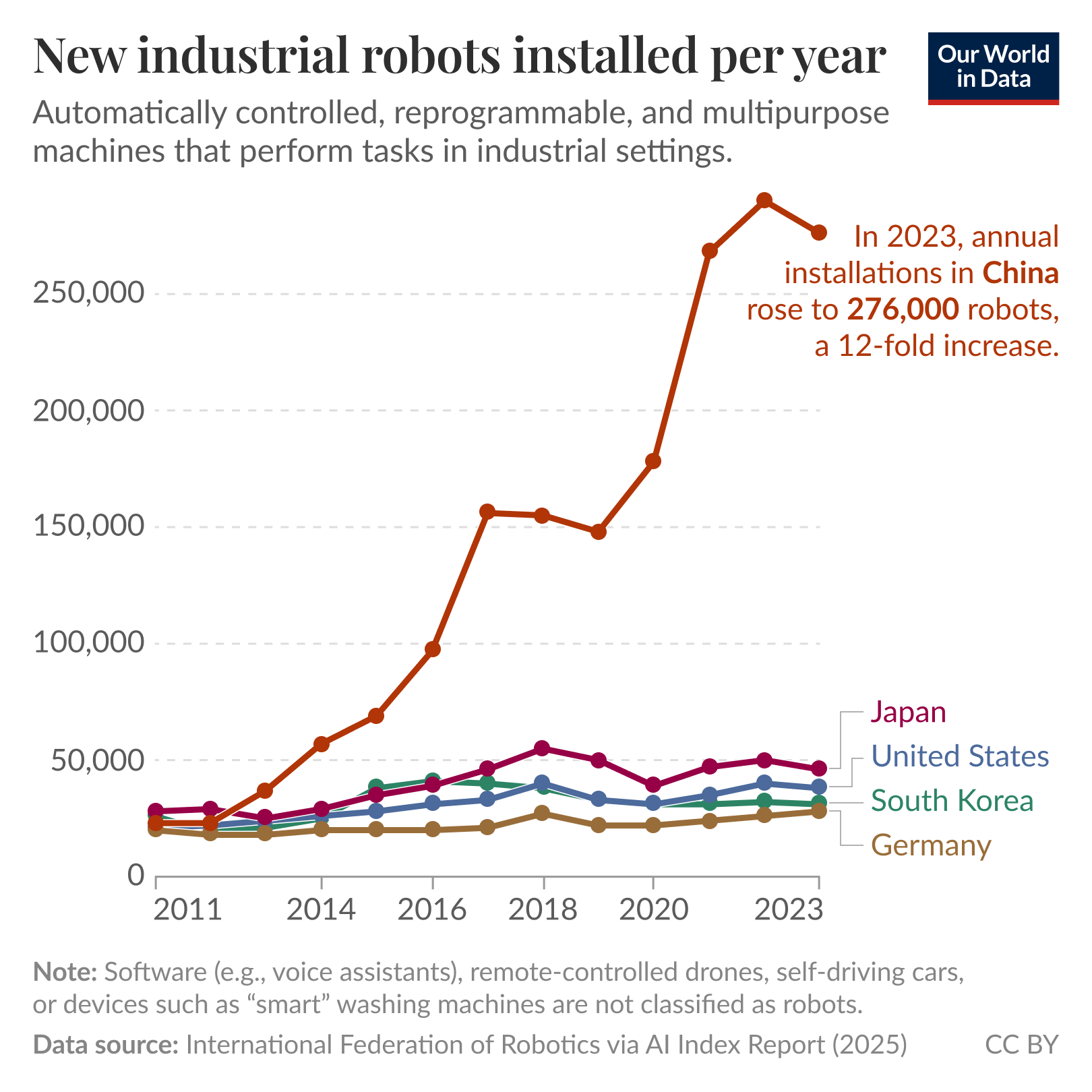
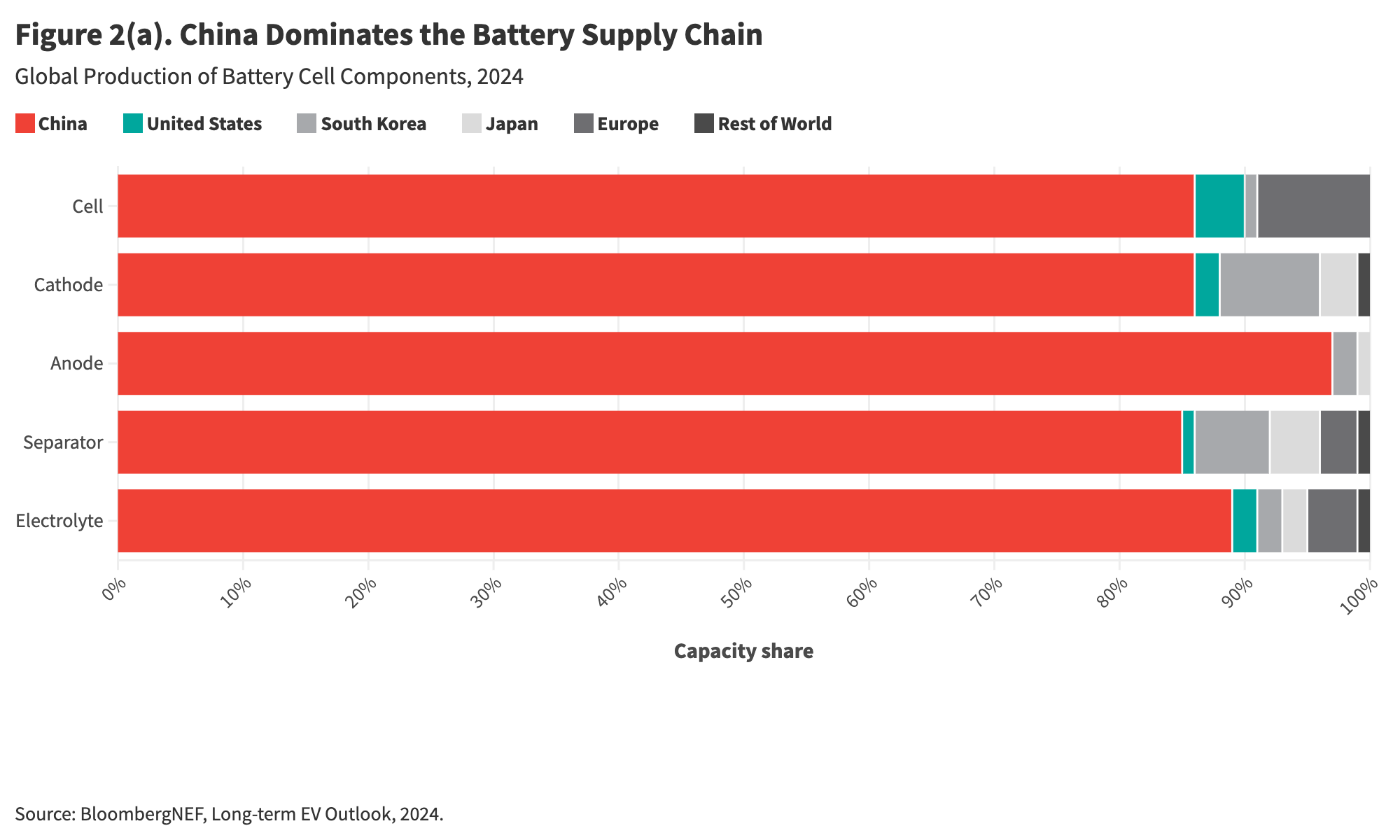
By many accounts, China is already winning many key facets of the 21st Century Economy. Chinese adoption of robotics has helped continue their manufacturing dominance. China also dominates the battery supply chain, which is essential for both affordable electric vehicles (EVs) and reliable renewable energy buildouts in areas of the U.S. with intermittent wind and solar generation.
Data centers are the next frontier of China’s industrial and technology policies and one of the few future technology points where they don’t already hold an advantage over the United States. Rather than ban data centers, China is working to solve environmental and grid capacity problems by pushing data center development westward into parts of the country with more wind and solar potential, away from coastal dense populations.
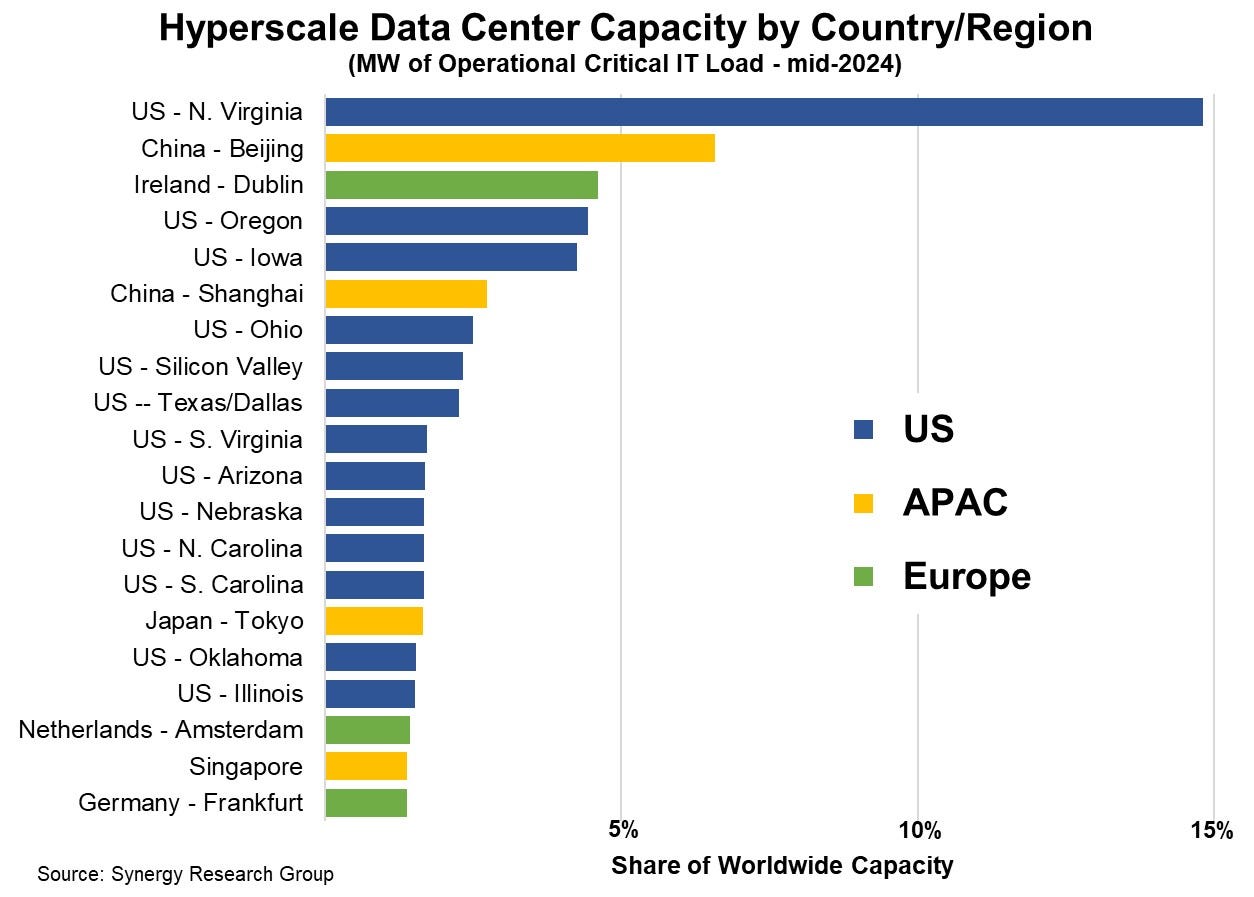
But the U.S. (for now) holds an advantage in data center capacity in a global market that is projected to grow immensely in the next decade. U.S. tech companies have the capital and willingness to build data centers and ensure that American (and global) citizens have access to AI technology housed and regulated by American laws that can be revised by democratically elected officials. This is inarguably better than subjecting our digital lives to a state-controlled AI enterprise in China. A U.S. moratorium on data center development (even a short-term one that delays construction) would be disastrous for any American citizen that uses the internet and would all but hand over the keys to the digital future to Xi Jinping.
My proposed (albeit incomplete) policy goals for the AI buildout:
I do not claim to be a universal expert, but I have followed, and often engaged in, the AI and data center discourse. I have generally been critical of data center projects, in particular the ones that get local and state subsidies. That is because I see and believe in the problems and existential dangers that an unregulated AI buildout presents.
But I have also come to adopt a more nuanced (and thus, probably unpopular) set of beliefs that I share below in no particular order. I think these are at least a good and rational starting point for discussing and debating about AI and data center policies. Maybe some of my thoughts end up being wrong, but the discussion needs to be had. I’m also not suggesting that any of these are politically “easy” but, hey, we need to get back to a place in our governance where we actually try to do hard things that are often better for everyone than the easy, quick fix (like data center bans).
Strengthening privacy laws to protect Americans data. This could include preventing AI companies from collecting certain data about users or preventing chat logs from being used to train models or being shared for advertisement purposes without consent, particularly for minors. We could examine regulating what data is collected, where and how it is stored, how it is utilized, and how long it is kept.
Eliminating local and state subsidies for AI. City, county, and state governments face budget constraints that the federal government (via deficit spending) does not experience in the same way. If investing in AI data centers is a national security concern (and I believe it is), then the national government should bear the cost of any needed subsidies. At the local and state level, these exemptions mean that local services (schools, fire and police, roads, health) don’t get to directly share in any prosperity that AI brings. Since AI uses local resources, it should pay local taxes. Additionally, any local tax exemptions that go toward buying equipment manufactured outside of the taxing region or paying out-of-region workers represent a net outflow of money from communities. Most communities where data centers are being built don't manufacture the gas generators or the computer chips, nor do they have a huge local supply of idle skilled trade workers. (Most models that estimate economic benefits assume construction labor is perfectly elastic.) This means many tax exemptions for data centers are forgoing revenue for local resident services to subsidize equipment manufactured out-of-state (or country) and pay out-of-state workers.
Tie any federal subsidies or tax credits to renewable practices and net-contribution to energy supply. A major concern around data centers is that a huge growth of fossil fuel generation will blow up any kind of progress toward decarbonization. This is a legitimate concern, and data centers that more heavily rely on renewable generation and batteries should be rewarded. Data center projects that contribute back to the grid financially or with energy should be rewarded even more. In this way, any subsidies are A) federal, so they don't leak out like they do for counties or states, B) directed toward a national security priority, C) addressing an environmental concern, and D) supporting grid reliability. Four potential birds with one (well-thought out) subsidy stone.
Encourage investment in data center equipment and renewable component manufacturing. I’ll caveat this by saying that I’m personally against corporate welfare in the form of large tax incentives. The CHIPS and Science Act in 2022, for example, didn’t fully understand the technological landscape or where the industry was innovating toward. The law passed, and boom! AI launched shortly after it was enacted and it now represents a large, often inefficient allocation of resources toward outdated technology and needs. But if proponents of this version of industrial policy feel they must subsidize something, then onshoring semiconductors, solar panels, and battery components has far more strategic and widespread economic benefit than just directly subsidizing one end-use in data centers.
Strengthen, monitor, and enforce environmental laws. Data centers should be required to be transparent about and accountable for their power consumption, water consumption, waste water disposal, and any emissions from fossil-fuel generation. The government should hire actual independent scientists (not ideologues) to study and monitor waste, consumption, and emissions and enforcement with noncompliance should actually be meaningful.
Regulate advertising and algorithmic transparency. People should know how they are being served content and how feeds are being manipulated and whether companies paid for their content to be placed more prominently in front of eyeballs. People should know if any AI models have political or social bias in their results. People should know if content was generated by AI or not. This is not an easy thing to regulate, but bringing some sort of 21st century version of the fairness doctrine to the digital space seems crucial.
Increase research grant funding to non-profit and public academic institutions to use AI in scientific research. Rather than allowing for-profit companies to initially dominate AI-driven scientific developments, keeping critical knowledge and discoveries in the public domain is crucial. This gives the public a stake in the technology and allows for more equitable commercialization (yes, eventually it has to be scaled for some sort of reasonable profit in the market).
The final two thoughts, I’ll put in their own section as these are more controversial and “big picture” political problems. I won’t pretend I know how to solve them but addressing them head-on is a debate everyone should welcome.
Reforming political campaign finance (personally, I’d like public finance). None of these policies can be meaningfully crafted and passed if our politicians (and thus, regulators) remain captured by tech industry dollars. When a billionaire can use his own fortune to steer an election result favorably for his companies, the system is never going to work whether we ban data centers or not.
Which leads to… antitrust updates. Many of the companies pursuing AI investments are simply too big and influence too much of the U.S. economy. It is difficult to imagine a new market entrant competing in the social media advertising space with Google or Meta. AI has the potential to compound this problem. I am not a lawyer, nor an antitrust expert. But I found this piece convincing, particularly in its conclusion that “the consumer-welfare standard cannot aptly outline the competitive dynamics of generative AI for digital platforms. If antitrust is to remain a meaningful check on Big Tech’s market power, antitrust must develop tools that account for algorithmic market structures, predictive systems, and the ways in which AI reconfigures both competition and harm.”
This post has now dragged on for far too long, but I think that also illustrates my opening point. Nuance is bad politics but good policy. Rather than haphazardly ban data centers for short-term populism points, we need to engage in the dozens of micro-debates around the complexities of data centers and AI to clarify benefits, study and reduce negative externalities, and advance real solutions to lead the AI landscape with democratic values at the forefront. This is an arduous task that requires more attention to detail than our politics has been able to muster for the better part of a decade, though, and time will tell if we can meet the challenge.
wow, thank you for this, nick! i often think about how so many people have little acceptance of nuance or duality and think of so many things in absolutes when actually most things require nuance and two things can be true, it’s very frustrating! and i had felt the transition to that from our political leaders is very much what has caused such the deep divide politically among us “normal” people (among other horrible things, obviously). but i so appreciate this clear breakdown of what’s happening, who is actually benefiting, and your policy ideas. you expanded my knowledge in a very easy way for a non-politician to understand (me). thank you!!