


It is not possible to log on to the internet today without seeing an argument about data centers. Across the country, people are very mad, and rightfully so. Data center development has boomed, bringing hastily conceived tech mega projects to previously quiet rural areas of the country. I have posted about how a Meta data center project received tax breaks to pollute my hometown. I have also posted that just banning data centers is bad policy. How do I reconcile having these two seemingly contradictory opinions? Well… I understand that the world isn’t black and white.
Across the country, politicians in both parties are tripping over themselves to seem the most populist on data centers. In the Wisconsin gubernatorial primary, Democratic Socialists of America (DSA) candidate Francesca Hong proposed a “Control+Alt+Delete” policy. This was particularly confusing, since she used the word “delete” but also pitched it as a “pause” until we could “figure out the true costs to our state.” While this might be appealing rhetorically, it is unclear what the “true costs” might be or how they would be “figured out.” Did she mean environmental costs? Lost tax revenue from exemptions? Resident satisfaction? The cost of AI adoption overall? Energy costs?
On the flip side, we’ve seen Republican candidate for Ohio governor Vivek Ramaswamy adopt populist rhetoric, including a pledge to make electricity “free” for Ohio residents who live near data centers. His ideas actually register as even more socialist than Hong’s, and it remains unclear what making electricity free to a majority of Ohioans might mean for private utility costs for those who don’t live near data centers but still need to pay for the power plants. (He also doesn’t seem to realize that data centers building a 1,000 MW power plant likely won’t operate the full 1,000 MW 24/7 so there really isn’t “extra” electricity to give away in the current setup. But I digress…)
Nobody seems to be able to explain what good data center policy might be. Here’s my attempt, which I expect will still have some holes and is open to more expert critique and revision. To be sure, there are costs to data centers that the tech companies aren’t currently paying. In economics, we call this an externality. Good policy should aim to reduce externalities and make wealthy companies transparently account for and pay for these costs.
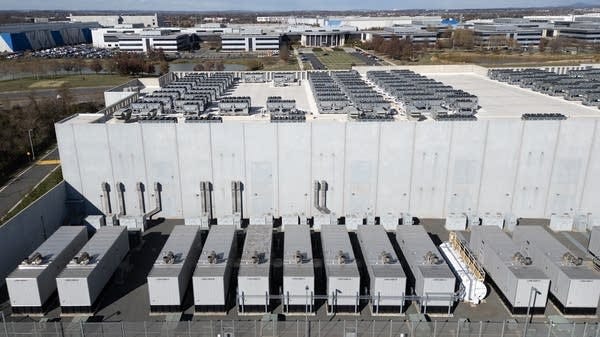
Conservative or libertarian opponents might argue that this type of regulation would reduce overall data center construction volume or make my Claude subscription more expensive. I simply believe that is fine. If we are building an excess of data centers or if my AI subscription is artificially cheap because we are polluting water sources or raising other people’s electricity rates, then we should simply be building fewer data centers, and I should be paying more to use the technology they enable. Why should my Claude subscription get subsidized? We have to find a path where we can grow, but responsibly and not in a way that so starkly benefits tech companies and tech users and harms smaller communities. I contend that this path is possible. We have done it before with a multitude of other technologies in the 20th century, although our politics seems to have forgotten how.
I don’t want this post to run on and on, so I’m planning to deep-dive into each of these broad policy pitches in subsequent posts. But, in short, here are a few key things that I think smart data center policy should incorporate, as opposed to outright bans:
End all corporate welfare for data centers. There is absolutely no reason why some states should exempt billions of dollars in sales taxes or why some counties and towns should exempt millions of dollars in property taxes for a data center. In the short term, you might get a construction job boom. Unless you have thousands of construction workers in your town milling about, you are probably subsidizing out-of-town workers at the expense of long-term funding for your own roads, schools, police, fire department, snow plowing, and health services. If you have to give away long-term revenues via corporate welfare to get a short-term boom, the juice isn’t worth the squeeze. This isn’t an “unproven technology” we are trying to subsidize to see if it could be useful. We already know it’s useful for things like scientific and medical research or democratizing coding to reduce reliance on giant software-as-a-service companies. We know it’s going to be ultimately profitable; there is no need to subsidize it anywhere.
Ban new fossil fuel generation. The air pollution associated with data centers comes from the gas turbines used to power them. Even if this is behind the meter (not connected to the grid), companies a) still emit air pollution and b) are still bidding up the cost of electricity equipment and construction for the utility companies you and I buy our electricity from. Those costs eventually get passed on to us. Sure, air pollution is currently monitored, but not well enough, in my opinion. And any new gas-fired air pollution in rural areas is more than existed before a data center is built. If a data center wants to come to town, it needs to commit to building its own renewable energy infrastructure and battery storage. Yes, that’s an expensive regulation. Yes, the world’s largest technology companies can afford it and remain profitable.
Require extra clean energy capacity. Data centers should be required to build 10-15% excess clean energy capacity. Rather than offer other companies federal tax incentives to build renewable energy projects, we could kill two birds with one stone. I’d be fine transferring some of the IRA federal tax credits to the excess clean energy capacity built by data centers. This extra energy would truly be designed to be excess and could be (eventually) connected to the grid to replace aging fossil fuel infrastructure without the rate hikes that utility companies would need to seek to build it themselves. This would help push utility rates down in the long run.
Tightly regulate wastewater and watershed management. We shouldn’t build data centers in drought-stricken places, and water withdrawal data should be publicly accessible. We should monitor their wastewater carefully. I think some of the pollution aspects are overblown in the media, but concentrated dissolved chemicals are a real concern when you evaporate water to cool data center equipment. We should study this and adopt new regulations and transparent monitoring for these chemicals and for any bacteria that inadvertently grow in the warmed water environments. Data centers should construct their own treatment facilities, and any water discharged back into public water supplies should be verifiably clean.
Provide generous royalties to nearby residents. Many data centers are being built in rural areas where they truly are eyesores or noise nightmares. Rather than shrug our shoulders and continue to ignore the frustrations of rural Americans, we should compensate them. A generous, multiyear payout from companies to residents within eyesight or earshot of data centers would not only stimulate local economies but could also enable them to relocate further from the data center if they want. There are already models of payments to farmers for other infrastructure built on their land.
The catch is that everyone needs to adopt policies along these lines for them to work. If only one state or one town does, companies can continue to shop around for the most lucrative deal in the name of “economic development.” In that scenario, companies and customers are usually the ultimate winners while local communities bear the risk of being the long-term losers if projects don’t deliver on their promises.
It is impossible today to know what new technologies or medicines AI could deliver. It is only a few years old. Although Henry Ford never said it, the oft-misattributed quote “if I had asked people what they wanted, they would have said a faster horse” is apt here. AI could become very bad and dystopian (we should also regulate data privacy robustly at the federal level to prevent a surveillance state).
But AI could also open new frontiers and dramatically accelerate progress in medicine through better chemical understanding, protein modeling, and genetic therapies. AI is already helping researchers make great gains in discovering new antibiotics to treat resistant infections and in treatments for degenerative diseases like Parkinson’s. AI could also accelerate breakthrough discoveries and help overcome obstacles in clean energy development, transportation technology, physics, astronomy, mathematics, and more. Anyone who definitively claims AI has no negatives or risks is wrong; anyone who says AI has no potential human benefits is equally wrong. Good policies should aim to preserve and maximize these benefits, while reducing their risks, including harm to data center communities, the rise of surveillance capitalism, and the loss of human art and expression.
This is admittedly a tightrope act of policymaking, and our current institutions will need to be strengthened and reformed if they are to rise to the challenge. The alternative, though, is to throw in the towel: to argue that our institutions are irredeemable and could never be capable of the job. Instead, ban proponents implicitly argue that we should bury our heads in the sand and deny and preclude the possibility of growth and progress in the future because of the whims of what is popular today. They argue that we must “Control+Alt+Delete” all data centers before we can “figure out” how they should work for us. To this, I argue that if we have the political muscle to ban data centers, then we surely have the political muscle to regulate and guide their growth responsibly.
Human rights advanced globally in the 20th century in part because America, despite its flaws, developed and controlled the key technologies that powered economic growth. If we treat the world as black and white and ban or mass-delay data centers because we believe for some reason that good progress is impossible, then we also accept the risk that the 21st century's key technologies will be controlled by people and places who may be far more flawed than us.
Nice, short read that gives nuance to a heated topic where normally people do not offer any.